
The Making of a Person of God

When the world feels like it's spinning out of control, remember that God remains unchanging. Whether you're at your lowest or your highest, He is the same steadfast God, constant and unwavering.
The Northern Kingdom: A Time of Darkness and Despair
For over 200 years, the Northern Kingdom of Israel has been under the rule of 19 consecutive evil kings, leading the people into the bleakest of times. Corruption and idolatry have taken hold, with the worship of Baal and Asherah replacing devotion to the one true God. Children have been sacrificed, immorality has been rampant in the temples, and the moral decay has reached a breaking point.
At the heart of this darkness stands King Ahab, who, through his marriage to the wicked Queen Jezebel, surpasses all others in wickedness. His actions have led the people further away from God, fostering a reign of evil that seems unstoppable. It is in the midst of this dire situation that God says, “Enough.”
But God does not raise an army or send in a SWAT team. He does not strike down the king—at least, not yet. Instead, He raises up one man.
This idea of “raising up” means God is preparing someone for His purpose, just as He did with David and countless others throughout history. God is preparing you, just as He prepared Elijah. Perhaps God is doing that right now, preparing someone to stand in the gap in these dark times.
Be the one—the one youth who stands for sexual purity, the one businessperson who demonstrates unwavering character, the one parent who says, “That’s not right.”
And so, God raises up Elijah.
The name Elijah comes from the Hebrew words Eli (God) and Jah (Jehovah), meaning “The Lord is Jehovah.” When God raises up Elijah, He is declaring that He alone is God. Baal? No. Asherah? No. God and God alone.
When we first encounter Elijah, this is the foundation of who he is—a man chosen by God to declare the truth in the face of rampant idolatry and evil.
For over 200 years, the Northern Kingdom of Israel has been under the rule of 19 consecutive evil kings, leading the people into the bleakest of times. Corruption and idolatry have taken hold, with the worship of Baal and Asherah replacing devotion to the one true God. Children have been sacrificed, immorality has been rampant in the temples, and the moral decay has reached a breaking point.
At the heart of this darkness stands King Ahab, who, through his marriage to the wicked Queen Jezebel, surpasses all others in wickedness. His actions have led the people further away from God, fostering a reign of evil that seems unstoppable. It is in the midst of this dire situation that God says, “Enough.”
But God does not raise an army or send in a SWAT team. He does not strike down the king—at least, not yet. Instead, He raises up one man.
This idea of “raising up” means God is preparing someone for His purpose, just as He did with David and countless others throughout history. God is preparing you, just as He prepared Elijah. Perhaps God is doing that right now, preparing someone to stand in the gap in these dark times.
Be the one—the one youth who stands for sexual purity, the one businessperson who demonstrates unwavering character, the one parent who says, “That’s not right.”
And so, God raises up Elijah.
The name Elijah comes from the Hebrew words Eli (God) and Jah (Jehovah), meaning “The Lord is Jehovah.” When God raises up Elijah, He is declaring that He alone is God. Baal? No. Asherah? No. God and God alone.
When we first encounter Elijah, this is the foundation of who he is—a man chosen by God to declare the truth in the face of rampant idolatry and evil.
1 Kings 17:1-24 NIV
Now Elijah the Tishbite, from Tishbe in Gilead, said to Ahab, “As the Lord, the God of Israel, lives, whom I serve, there will be neither dew nor rain in the next few years except at my word.”
We learn here that Elijah is from Tishbe in Gilead. This would be like saying, “Dan from Annapolis, Missouri.” This is the context of who he is—this is how we know him now!
The situation Elijah is speaking into is incredibly bleak: No dew. No rain for the next few years. Imagine the impact. It's like saying, “No groceries. No gas. No access to banks…” A total economic shutdown. Everything would grind to a halt.
So, what do you expect to happen next?
You might think, “Okay, it’s time to lock down! God’s about to drop the hammer—BAM! Let’s brace for impact!”
But remember, God is raising up something greater.
The opposite of what you might expect happens. Rather than unleashing devastation in a dramatic display, God moves Elijah away.
Now Elijah the Tishbite, from Tishbe in Gilead, said to Ahab, “As the Lord, the God of Israel, lives, whom I serve, there will be neither dew nor rain in the next few years except at my word.”
We learn here that Elijah is from Tishbe in Gilead. This would be like saying, “Dan from Annapolis, Missouri.” This is the context of who he is—this is how we know him now!
The situation Elijah is speaking into is incredibly bleak: No dew. No rain for the next few years. Imagine the impact. It's like saying, “No groceries. No gas. No access to banks…” A total economic shutdown. Everything would grind to a halt.
So, what do you expect to happen next?
You might think, “Okay, it’s time to lock down! God’s about to drop the hammer—BAM! Let’s brace for impact!”
But remember, God is raising up something greater.
The opposite of what you might expect happens. Rather than unleashing devastation in a dramatic display, God moves Elijah away.
God Takes Elijah into a Season of Hiding
Why?
Because God wants to do something in him before He can do something through him.
To accomplish this, God needs to get Elijah away from Ahab and the chaos.
Think about it: Just like the Israelites were not ready for battle, God had to take them the long way around.
Exodus 13:17
When Pharaoh let the people go, God did not lead them on the road through the Philistine country, though that was shorter. For God said, “If they face war, they might change their minds and return to Egypt.”
The same principle applies here. God sees Elijah's calling, but before Elijah can step into his purpose, God must first raise and prepare him for what’s ahead.
God sent the message—now He’s preparing the messenger.
Why?
Because God wants to do something in him before He can do something through him.
To accomplish this, God needs to get Elijah away from Ahab and the chaos.
Think about it: Just like the Israelites were not ready for battle, God had to take them the long way around.
Exodus 13:17
When Pharaoh let the people go, God did not lead them on the road through the Philistine country, though that was shorter. For God said, “If they face war, they might change their minds and return to Egypt.”
The same principle applies here. God sees Elijah's calling, but before Elijah can step into his purpose, God must first raise and prepare him for what’s ahead.
God sent the message—now He’s preparing the messenger.
Big Idea: God Wants To Do Something In You So He Can Do Something Through You
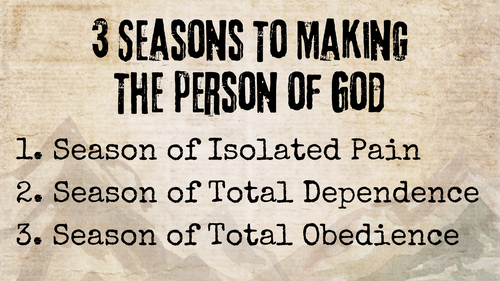
1. Season of Isolated Pain
1 Kings 17:2-3
2 Then the word of the Lord came to Elijah: 3 “Leave here, turn eastward and hide in the Kerith Ravine, east of the Jordan.
2 Then the word of the Lord came to Elijah: 3 “Leave here, turn eastward and hide in the Kerith Ravine, east of the Jordan.
Notice where God takes Elijah.
He sends him to the Kerith Ravine, a place where Elijah is cut off—both physically and spiritually. Kerith means "cut off" or "cut down." Elijah is in a place of isolation, devoid of supply, cut off from everything that could sustain him. This is isolated pain.
But why does God do this?
God is working in Elijah during this time of isolation. He is privately preparing him, shaping him, so Elijah can later fulfill his calling publicly.
Some of you may be asking the same question right now: "God, where are You? Why have You brought me to this 'Kerith Ravine' in my life?"
Understand this: God is breaking Elijah—and maybe He’s breaking you too—from what you were to what He is calling you to be. It’s a season of isolated pain, but it has a purpose. God has you in this place of isolation, removing distractions, allowing some suffering, and maybe even relocating you—whether it’s a job change, a new environment, or a period of loneliness. God is doing something in you right now, so that He can do something through you later.
A.W. Tozer once said,
"It's doubtful God can bless a man until He allows him to be hurt deeply."
This is exactly what we see in the story of Job. Job was a righteous man who went through deep suffering, but in that suffering, God shaped him, refined him, and ultimately blessed him in ways he never could have imagined before.
He sends him to the Kerith Ravine, a place where Elijah is cut off—both physically and spiritually. Kerith means "cut off" or "cut down." Elijah is in a place of isolation, devoid of supply, cut off from everything that could sustain him. This is isolated pain.
But why does God do this?
God is working in Elijah during this time of isolation. He is privately preparing him, shaping him, so Elijah can later fulfill his calling publicly.
Some of you may be asking the same question right now: "God, where are You? Why have You brought me to this 'Kerith Ravine' in my life?"
Understand this: God is breaking Elijah—and maybe He’s breaking you too—from what you were to what He is calling you to be. It’s a season of isolated pain, but it has a purpose. God has you in this place of isolation, removing distractions, allowing some suffering, and maybe even relocating you—whether it’s a job change, a new environment, or a period of loneliness. God is doing something in you right now, so that He can do something through you later.
A.W. Tozer once said,
"It's doubtful God can bless a man until He allows him to be hurt deeply."
This is exactly what we see in the story of Job. Job was a righteous man who went through deep suffering, but in that suffering, God shaped him, refined him, and ultimately blessed him in ways he never could have imagined before.
2. Season of Total Dependence
1 Kings 17:4-6
4 You will drink from the brook, and I have directed the ravens to supply you with food there.” 5 So he did what the Lord had told him. He went to the Kerith Ravine, east of the Jordan, and stayed there. 6 The ravens brought him bread and meat in the morning and bread and meat in the evening, and he drank from the brook.
4 You will drink from the brook, and I have directed the ravens to supply you with food there.” 5 So he did what the Lord had told him. He went to the Kerith Ravine, east of the Jordan, and stayed there. 6 The ravens brought him bread and meat in the morning and bread and meat in the evening, and he drank from the brook.
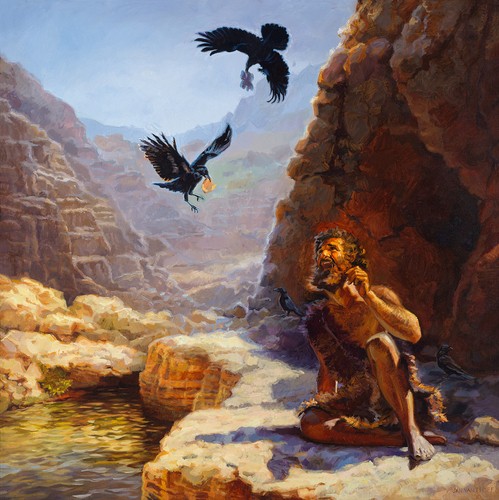
Notice what Elijah does here:
God alone is the source of his provision. God didn’t tell him, "Grab a fishing rod, catch your own fish," or "Get a bow, hunt for your food," or "Take a sling, gather what you need!" No.
In this season of isolation, God is teaching Elijah something crucial:
It’s not by your own efforts that you are provided for, but by God's hand. God broke Elijah's reliance on his own strength and resources to show him that God is the One who provides.
What God is doing here is what He often does in our own lives: He removes the things we rely on for security. It’s a lesson in total dependence on Him.
Remember: God supplies all our needs according to His riches in glory. (Philippians 4:19) God opens the windows of heaven when we trust in His provision.
God Provides: Total Dependence
Consider the story of a Christian mother living next to an atheist. Their walls were thin, and he often heard her praying, thanking God for her provision. One month, when her finances were running low, she prayed, "God, I need food." To prove his point, the atheist bought food and placed it at her door. When she found it, she praised God, saying, "Thank You, Lord!" Over and over, she thanked God.
The atheist then told her, "It was me who bought the food, not God."
She smiled and replied, "I knew God would provide. And I’m so glad He used the devil to pay for it!"
Remember this: God gave Elijah enough for each day—not for the month or year, but for the day.
The ravens brought him bread and meat in the morning and evening, and he drank from the brook. God provided exactly what Elijah needed—nothing more, nothing less. God knows exactly what we need, and He provides just in time.
God alone is the source of his provision. God didn’t tell him, "Grab a fishing rod, catch your own fish," or "Get a bow, hunt for your food," or "Take a sling, gather what you need!" No.
In this season of isolation, God is teaching Elijah something crucial:
It’s not by your own efforts that you are provided for, but by God's hand. God broke Elijah's reliance on his own strength and resources to show him that God is the One who provides.
What God is doing here is what He often does in our own lives: He removes the things we rely on for security. It’s a lesson in total dependence on Him.
Remember: God supplies all our needs according to His riches in glory. (Philippians 4:19) God opens the windows of heaven when we trust in His provision.
God Provides: Total Dependence
Consider the story of a Christian mother living next to an atheist. Their walls were thin, and he often heard her praying, thanking God for her provision. One month, when her finances were running low, she prayed, "God, I need food." To prove his point, the atheist bought food and placed it at her door. When she found it, she praised God, saying, "Thank You, Lord!" Over and over, she thanked God.
The atheist then told her, "It was me who bought the food, not God."
She smiled and replied, "I knew God would provide. And I’m so glad He used the devil to pay for it!"
Remember this: God gave Elijah enough for each day—not for the month or year, but for the day.
The ravens brought him bread and meat in the morning and evening, and he drank from the brook. God provided exactly what Elijah needed—nothing more, nothing less. God knows exactly what we need, and He provides just in time.
3. Season of Total Obedience
1 Kings 17:7-9(a)
7 Some time later the brook dried up because there had been no rain in the land. 8 Then the word of the Lord came to him: 9 “Go at once to Zarephath in the region of Sidon and stay there.
7 Some time later the brook dried up because there had been no rain in the land. 8 Then the word of the Lord came to him: 9 “Go at once to Zarephath in the region of Sidon and stay there.
Wow! “Some time later…”
This wasn’t a quick moment; it was months. And then, the story takes an unexpected twist.
God dries up the brook. No more ravens. The brook is dry.
Questions arise:
You’ve told the most evil king there will be no water, and you’ve been led to the Kerith Ravine. You've been fed by ravens, and the brook supplied your water. And now… it’s all gone. What did I do wrong?
Remember this:
The God who gives can also take away.
Sometimes, God allows the brooks in our lives to dry up—to move us to where He wants us to be. It’s about total obedience. He does this so we can depend entirely on Him.
This wasn’t a quick moment; it was months. And then, the story takes an unexpected twist.
God dries up the brook. No more ravens. The brook is dry.
Questions arise:
You’ve told the most evil king there will be no water, and you’ve been led to the Kerith Ravine. You've been fed by ravens, and the brook supplied your water. And now… it’s all gone. What did I do wrong?
Remember this:
The God who gives can also take away.
Sometimes, God allows the brooks in our lives to dry up—to move us to where He wants us to be. It’s about total obedience. He does this so we can depend entirely on Him.
Personal Story:
Let me share a bit about Ginger and me coming to Annapolis. God took away the things we once loved—the road and the city. For many years, we traveled alongside the Lester family, and for Ginger, it had been her entire life up until that point. God shifted our hearts and removed our passion for traveling, but Ginger kept her love for music, continuing to support from a distance. And now, God has placed us in a season here in Annapolis, Missouri.
Just like Elijah was moved from the dry brook, we are moved too—God is still raising us up. We are being shaped for what’s coming, just as Elijah was not yet ready to face the prophets of Baal. He will be—but he’s still in preparation.
Let me share a bit about Ginger and me coming to Annapolis. God took away the things we once loved—the road and the city. For many years, we traveled alongside the Lester family, and for Ginger, it had been her entire life up until that point. God shifted our hearts and removed our passion for traveling, but Ginger kept her love for music, continuing to support from a distance. And now, God has placed us in a season here in Annapolis, Missouri.
Just like Elijah was moved from the dry brook, we are moved too—God is still raising us up. We are being shaped for what’s coming, just as Elijah was not yet ready to face the prophets of Baal. He will be—but he’s still in preparation.
HE IS STILL RAISING HIM UP!
1 Kings 17:10-14
10 So he went to Zarephath. When he came to the town gate, a widow was there gathering sticks. He called to her and asked, “Would you bring me a little water in a jar so I may have a drink?” 11 As she was going to get it, he called, “And bring me, please, a piece of bread.” 12 “As surely as the Lord your God lives,” she replied, “I don’t have any bread—only a handful of flour in a jar and a little olive oil in a jug. I am gathering a few sticks to take home and make a meal for myself and my son, that we may eat it—and die.” 13 Elijah said to her, “Don’t be afraid. Go home and do as you have said. But first make a small loaf of bread for me from what you have and bring it to me, and then make something for yourself and your son. 14 For this is what the Lord, the God of Israel, says: ‘The jar of flour will not be used up and the jug of oil will not run dry until the day the Lord sends rain on the land.’”
1 Kings 17:10-14
10 So he went to Zarephath. When he came to the town gate, a widow was there gathering sticks. He called to her and asked, “Would you bring me a little water in a jar so I may have a drink?” 11 As she was going to get it, he called, “And bring me, please, a piece of bread.” 12 “As surely as the Lord your God lives,” she replied, “I don’t have any bread—only a handful of flour in a jar and a little olive oil in a jug. I am gathering a few sticks to take home and make a meal for myself and my son, that we may eat it—and die.” 13 Elijah said to her, “Don’t be afraid. Go home and do as you have said. But first make a small loaf of bread for me from what you have and bring it to me, and then make something for yourself and your son. 14 For this is what the Lord, the God of Israel, says: ‘The jar of flour will not be used up and the jug of oil will not run dry until the day the Lord sends rain on the land.’”
Notice what’s happening here:
Elijah asks for water and bread—in the midst of a drought. He responds the way he’s learned to respond—he’s seen it before! He’s been in the Kerith Ravine, where God provided through ravens and a brook.
In this moment, Elijah is confident that God will supply.
He knows what God can do because he’s seen it firsthand. He understands that in the midst of loneliness, brokenness, and emptiness, God provides.
1 Kings 17:15-16
15 She went away and did as Elijah had told her. So there was food every day for Elijah and for the woman and her family. 16 For the jar of flour was not used up and the jug of oil did not run dry, in keeping with the word of the Lord spoken by Elijah.
Now time passes, and the boy dies.
1 Kings 17:17
Some time later the son of the woman who owned the house became ill. He grew worse and worse, and finally stopped breathing.
She asks Elijah: “What did I do wrong? What sin have I committed?"
1 Kings 17:18
She said to Elijah, “What do you have against me, man of God? Did you come to remind me of my sin and kill my son?”
But Elijah does something incredible—he prays, and the boy comes back to life. This is the first time God raises someone from the dead.
1 Kings 17:22
The Lord heard Elijah’s cry, and the boy’s life returned to him, and he lived.
Why did this happen?
God led Elijah through a season of total dependence—first cutting off all sources of comfort, then moving him to Zarephath, where he saw God provide again. And now, a miracle happens—God raises the boy from the dead.
God Did All This To Make Elijah the Man of God He Needed Him to Be.
When we look at Elijah's journey, we see that God was preparing him for something greater. From telling the evil king of a total economic shutdown, to being isolated in the Kerith Ravine, to having the brook dry up and moving to Zarephath, God was shaping Elijah for the challenges ahead.
1 Kings 17:24
Then the woman said to Elijah, “Now I know that you are a man of God and that the word of the Lord from your mouth is the truth.”
Now, Elijah is the "man of God."
The word of the Lord is in him, and he speaks truth.
God is developing you too.
It may take a Kerith Ravine moment, where everything seems to dry up and you feel isolated. But God is making you into the person He wants you to be.
It may seem like all you have are ravens feeding you or a brook to drink from—but God is at work, preparing you for something far greater.
Elijah asks for water and bread—in the midst of a drought. He responds the way he’s learned to respond—he’s seen it before! He’s been in the Kerith Ravine, where God provided through ravens and a brook.
In this moment, Elijah is confident that God will supply.
He knows what God can do because he’s seen it firsthand. He understands that in the midst of loneliness, brokenness, and emptiness, God provides.
1 Kings 17:15-16
15 She went away and did as Elijah had told her. So there was food every day for Elijah and for the woman and her family. 16 For the jar of flour was not used up and the jug of oil did not run dry, in keeping with the word of the Lord spoken by Elijah.
Now time passes, and the boy dies.
1 Kings 17:17
Some time later the son of the woman who owned the house became ill. He grew worse and worse, and finally stopped breathing.
She asks Elijah: “What did I do wrong? What sin have I committed?"
1 Kings 17:18
She said to Elijah, “What do you have against me, man of God? Did you come to remind me of my sin and kill my son?”
But Elijah does something incredible—he prays, and the boy comes back to life. This is the first time God raises someone from the dead.
1 Kings 17:22
The Lord heard Elijah’s cry, and the boy’s life returned to him, and he lived.
Why did this happen?
God led Elijah through a season of total dependence—first cutting off all sources of comfort, then moving him to Zarephath, where he saw God provide again. And now, a miracle happens—God raises the boy from the dead.
God Did All This To Make Elijah the Man of God He Needed Him to Be.
When we look at Elijah's journey, we see that God was preparing him for something greater. From telling the evil king of a total economic shutdown, to being isolated in the Kerith Ravine, to having the brook dry up and moving to Zarephath, God was shaping Elijah for the challenges ahead.
1 Kings 17:24
Then the woman said to Elijah, “Now I know that you are a man of God and that the word of the Lord from your mouth is the truth.”
Now, Elijah is the "man of God."
The word of the Lord is in him, and he speaks truth.
God is developing you too.
It may take a Kerith Ravine moment, where everything seems to dry up and you feel isolated. But God is making you into the person He wants you to be.
It may seem like all you have are ravens feeding you or a brook to drink from—but God is at work, preparing you for something far greater.
Next Step:
Desire for God to work deeply in you, so He can work powerfully through you.
Even if it means going through a Kerith Ravine to make it happen.
Desire for God to work deeply in you, so He can work powerfully through you.
Even if it means going through a Kerith Ravine to make it happen.
No Comments